From the Vault: Scent of A Woman Review

I found my folder of k-drama reviews on my Google Drive and I want to start a series of past writings, reviews etc. that I may have never posted anywhere. For your entertainment and my nostalgia. I can laugh at myself and I hope you can laugh with me.

Yeon Jae is getting past marriageable age and facing the life of a spinster, her hair is always a mess, and she wears gigantic glasses, hiding the fact that she’s actually pretty-she just doesn’t have the time to be.  Her boss is mean and pushes her around, even when she tries her hardest and does everything in order to not get fired, her fellow co-workers are mean to her too, and it’s the last blow when she finds out she has cancer.

Finally Yeon Jae, in a sudden rage, quits her job, and gives her resignation letter that she wrote out five years ago to her boss. 

Ji Wook is the director of the company Yeon Jae works for, and the president is his dad.  He doesn’t care really about anything, has a “life is horrible even though I’m dirt rich” sort of attitude.  He’s arranged to marry the daughter of a big company, but has no feelings for her whatsoever, and she is the same. When Yeon Jae sees him coming out of his fancy sports car, she’s gaped mouth and wide-eyed, and through a series of fortunate events, ends up meeting Ji Wook when he mistakes her for his tour guide and they have a wonderful cheesy time until Ji Wook’s fiance shows up on their trip, and then Yeon Jae goes and tangos with an old man sadly.

Once Yeon Jae returns home from her trip, she has a bucket list, and wants to learn to tango, so she signs up for a class, and Ji Wook follows her there and they end up dancing together and with a sudden passion figure out their feelings for one another! 

Tangoing it up

The Doctor treating Yeon Jae for her cancer, is also one of her longtime friends, and it’s so dead obvious he likes her, but Yeon Jae cries in every episode, and it just gets annoying. MAN UP WOMAN! I really want the Doctor to end up with that happy patient…who has more emotion than all three of the main characters combined.

Now, I started off liking this drama, but then I started to get annoyed, like, what is holding the two main characters back from getting together? Why are they making it so freaking difficult? Maybe because Ji Wook is dumb, or maybe Yeon Jae is too pathetic. Sure, you have cancer, but the fact that you selfishly started a relationship with Ji Wook when you knew you had cancer but didn’t tell him is low.  Go cry in a corner…wait, you already did.

I know a lot of people thought this drama was amazing and heartfelt, but honestly, no.

And I’m not kidding, at least Big (which I didn’t finish also) had a twisted plot, even if the ending did suck. This is all trivial.  Every facial expression is the same, and when they show any other emotion (which is usually tears), it’s just so hideous.

Oh yeah, and so they realize their feelings for one another, and Ji Wook breaks off his engagement, and then they have some more happy times, but then they break up, and then Ji Wook finds out about Yeon Jae’s health predicament and then he’s angry and she is crying and then he cries and gets drunk and she cries some more.

And from the vibes I’m getting, she probably will die from dried-out tear glands. [I would like to point out that I was using the word “vibes” before it was cool].

But anyway, that is what I’ve got so far, and it’s not much.  The Doctor and Yeon Jae are tangoing together for his charity ball thing and Ji Wook is eventually going to come back to Yeon Jae, he just is a baby and is mad at her for not telling him in the beginning, which is a valid reason to be mad.

Now, if I decide to pick this up again at episode 11, I will…but right now, I’m pretty into Gu Family Book and anything else is just stupid until then. 

🙂

I looked high and low to find out how this drama ends without actually watching it, but to no avail. I guess we will just have to live wondering if they tangoed off into the sunset together and if Yeon Jae was cured of her cancer.

Won’t You Be My Neighbor?

5b214a199a636-image

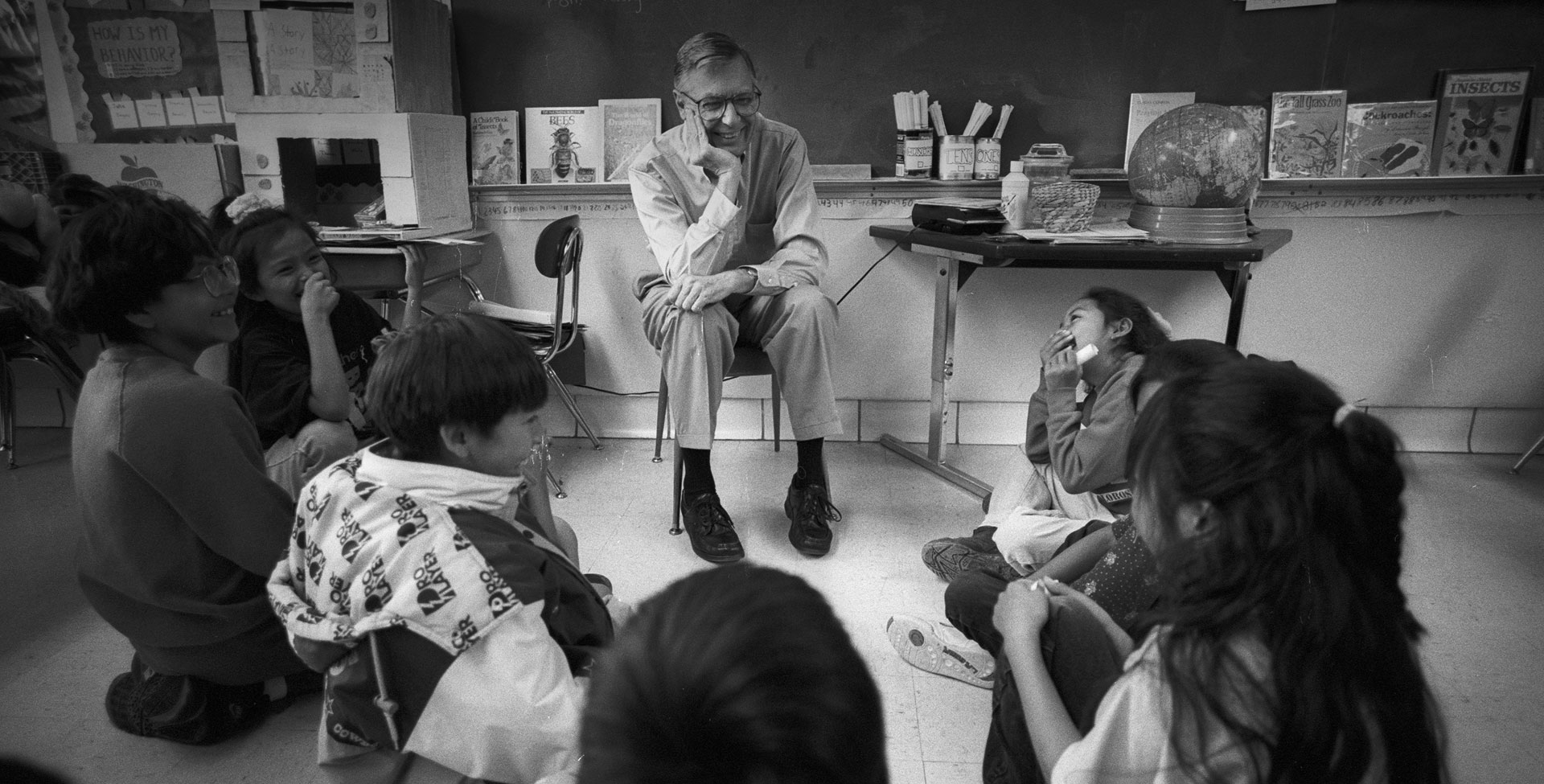
On May 1, 1969 – Fred Rogers testified in front of the US Senate Commerce Committee to request funds to support the growth of public television to Senator Pastore. Seemingly rough around the edges, Pastore listened to Rogers as he explained the importance of child development and the generation to come.

“I feel like if we in public television can only make it clear that feelings are mentionable and manageable we would have done a great service for mental health[…]let me tell you the words of one of the songs which I feel very important[…]what do you do with the mad that you feel? When you feel so mad you could bite? When the whole wide world seems oh so wrong and nothing you do seems very right? What do you do? Do you punch a bag? Do you pound some clay or some dough? Do you round up friends for a game of tag or see how fast you can go? It’s great to be able to stop when you’ve planned the thing that’s wrong, and to be able to do something else instead, and think this song. I can stop when I want to; can stop when I wish; can stop-stop-stop anytime, and what a could feeling to feel like this and know that the feeling is really mine, know that there is something deep inside that helps us become what we can; for a girl can be someday a lady, and a boy can be someday a man.” – Fred Rogers

Senator Pastore, visibly impressed, received goosebumps and gave the funds to public programming.

“The greatest thing that we can do is to help somebody know that they’re loved and capable of loving.” – Fred Rogers

Watching Will You Be My Neighbor? brought flashbacks of my own childhood. In an age when social media, cellphones and the constant connection before internet, Mr. Rogers was tailored to an audience that didn’t have those capabilities, but as I remember growing up, every child, no matter what age or generation they are growing up in, faces the same difficulties of not feeling loved and wanted.

Even as a grown up, I fight these same feelings of the constant seeking of approval. Although Mr. Rogers received backlash for his “everyone is special” message from the critics who say “if everyone is special, no one is.” Mr. Rogers led the movement into participation trophies and emotional thinkers.

But I don’t believe that was ever Mr. Rogers intention.

Mr. Rogers Neighborhood was on air from 1968 to 2001 with 31 seasons and nearly a thousand episodes; Rogers was a lifelong registered Republican and an ordained minister, he faced a wide area of issues on his half hour segment, such as divorce, assassination and racism. Rogers was a tolerant human being who said that we should love others and ourselves.

In 2017 a study from Mental Health America showed 43.7 million Americans struggle annual with mental health illness. 8.47% report having substance or alcohol abuse problems. 11% of youth report suffering from one depressive episode in the past year. 7.4% of youth suffer from sever depression. 5.13% of youth suffer from substance or alcohol abuse. (You can see the study here)

When 9/11 hit, his wife said that he felt defeated. Evil kept existing and the world was always going to be facing tragedy.

One of my friends on Instagram posted a metaphor of being a lighthouse for those around us. To paraphrase, he talked about how nations spend so much in trying to protect themselves from external threats, but that is not enough to insure safety. Extending it to individuals, safety from the external does not stop us from hurting ourselves and others.

We need beacons in our lives, and we need to be beacons for others. Though we cannot control what they do, “you can be a light that others can follow to safety.”

“How sad it is that we give up on people who are just like us.” – Fred Rogers

That being said, Mr. Rogers was a beacon. He let children know for years, everyday that for thirty minutes, we can drown out the noise.

The statistics from 2017, show a fallen world. A world where depression is becoming more prominent because we never feel good enough, loved enough, or wanted. We believe the lies and accept them as truth. This world is scary and tragic…but a man saw that in the midst of the tragedy and fear, we can be a beacon of truth.

“The toughest thing is to love somebody who has done something mean to you. Especially when that somebody has been yourself.” – Fred Rogers

The truth that Jesus loves us oh so very much and because Jesus loves us and forgives us, we need to love and forgive ourselves and others.

I prayer that my light and your light will not grow dim or that you or I will never get to far from the shoreline to see our “beacons”, the people that love us; want the best for us, and steadily stand firm as they wait for our return. Those people exemplify Christ in their love. Jesus is never going to stop loving you, and even when it seems like you are “too far gone”, you never will be.

“For the Son of Man came to seek and to save the lost” – Luke 19:10

Will You Be My Neighbor? is a tear jerker in which I highly recommend. It’s not because it’s sad necessarily, but because it serves as a reminder that as a child of God, you are loved, wanted and matter.

frc_slider

I Can’t Go On, I’ll Go On

Processed with VSCO with b5 preset

We don’t fully know nor understand something until we experience it for ourselves.

Not death; not heartbreak; not terminal diseases…not even something extremely anticlimactic like failing a class or hitting way below average on an exam score.

As John Keats once wrote “Nothing ever becomes real ’til it is experienced.” 

But as I’m sitting here in the car…watching the clouds sit peacefully in the sky, the words keep coming to me.

“I can’t go on. I’ll go on.”

Those words have been echoing in my head since I read them.

I can’t.

But I will.

Because I must.

Even though I may not be terminally ill, as my health seems to be thriving at the moment, this goes with every painful experience we face. To the terminally ill, to the depressed, to the anxiety, to the heartbreaks…we will go on. You will continue live.

As John 1:5 says, “the light shines in the darkness and the darkness has not overcome it.” 

After reading When Breath Becomes Air, I decided to skim through Ecclesiastes again. Let me tell you, Solomon is one depressing guy.

“I have seen all the things that are done under the sun; all of them are meaningless, a chasing after the wind.” – Ecclesiastes 1:14

Wisdom, pleasure, riches, folly, toil, and so forth are all meaningless. Solomon points us to find God-conscious joy (for more clarity I encourage you to read this article here),

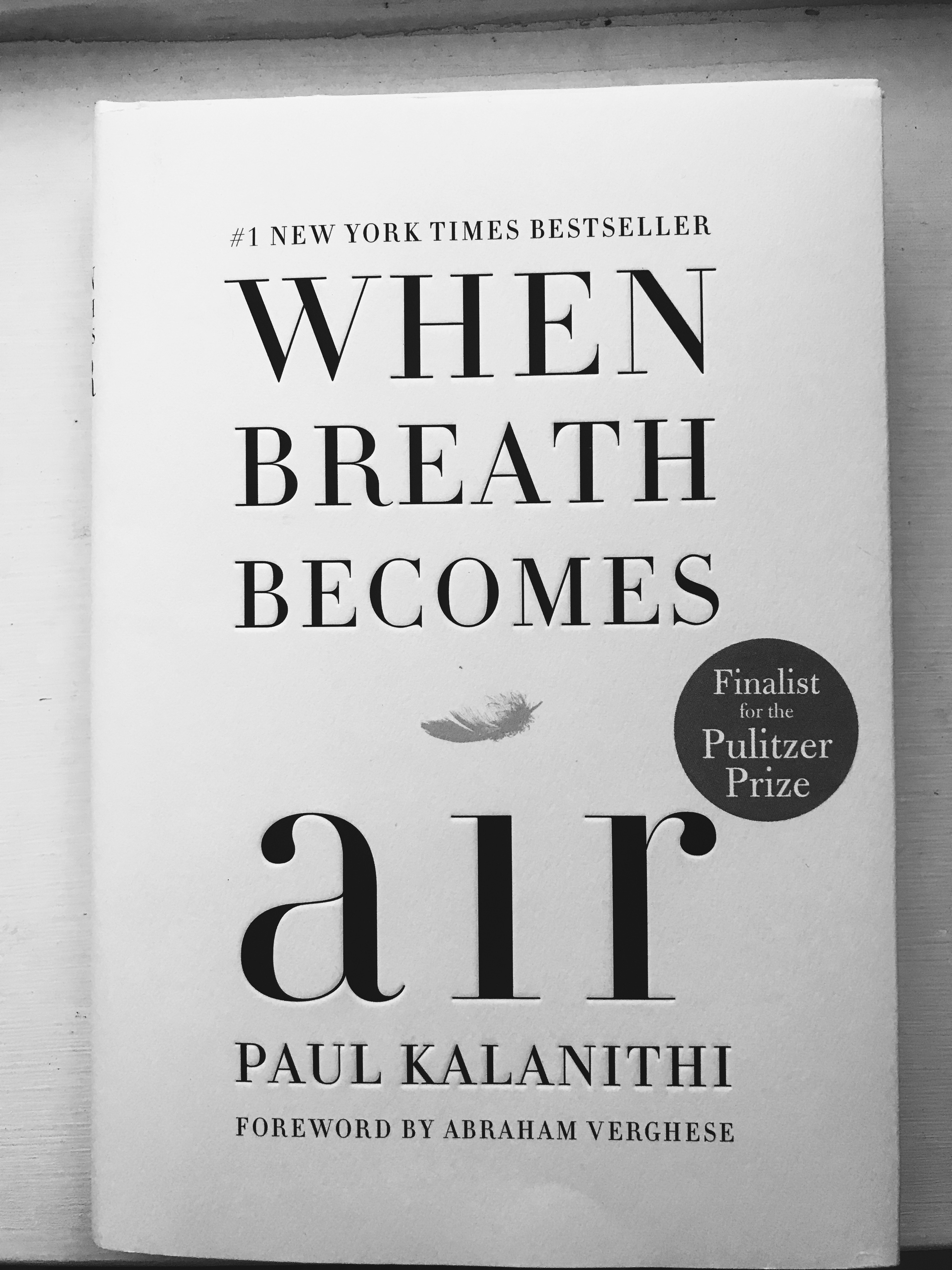
When Breath Becomes Air by Paul Kalanithi is a beautiful and simplistic read full of raw truth.

Death is a final outcome of everything we accomplish in life. We don’t think about that though… as Paul Kalanithi said most of us live with a passivity toward it. A a neurosurgeon he actively engaged in it, consoling his patients into acceptance and rationality, but until he became a patient himself, he did not fully understand the pain in which suffering entails. He talks of his stages of grief in reverse, how he started from acceptance and moved to denial. Uncertain of how much time he had left; trying to grasp for the numbers. If he knew how much time, he would do things differently.

But as I sat in the car this afternoon, I thought of myself dying in a car crash that very second. Knowing that there is always a possible outcome of death, terminally ill or not, will I choose to live differently?

Even though Paul knew death was his fate, he refused to act as if he were dying. To choose to live and face the outcome we are all surely are going to face, that is a strength we will not know unless we experience it ourselves. As he said, even if he was dying, until he was dead, he still was living.

As Tim McGraw sings “lets live like we are dying..” why not live like we are living?

Having worked in the medical field myself for four years, I understood a sense of what Paul’s run in with terminal patients felt like. I understood the desensitized feelings. When his young doctor came in to check on him and was checking off the boxes. How many times did I do that when taking care of a patient? Many. Countless. So I could get onto the next one and clock out.

Human sympathy is a strange thing, the more it is pushed, the more apathetic we become, until we feel nothing at all.

Paul’s measure of what makes life worth living  is something to learn from. Even though his manuscript went unfinished, his final written words to his daughter are this:

“When you come to one of the many moments in life when you must give an account of yourself, provide a ledger of what you have been, and done, and meant to the world, do not, I pray, discount that you filled a dying man’s days with a sated joy, a joy unknown to me in all my prior years, a joy that does not hunger for more and more, but rests, satisfied. In this time, right now, that is an enormous thing.”